What Is Halal-Certified Frozen Chicken and Why It Matters for Importers
July 6, 2026
What Does IQF Frozen Chicken Mean and Why Buyers Prefer It
July 22, 2026
If you’ve been talking to Brazilian chicken suppliers, you’ve probably heard “MAPA certified” thrown around like it’s a single thing. But most buyers don’t realize: MAPA isn’t a certification itself. It’s a ministry. And understanding what sits underneath it, specifically SIF and DIPOA, is what actually tells you whether a supplier is legitimate or just using the right words.
This matters because there are suppliers who cite MAPA broadly without being able to produce the specific documentation that makes a shipment clearable at your destination port. This guide breaks down exactly how the system works, what the steps are, and what you need to verify before you commit to a purchase.
What MAPA Is and Its Role in Brazilian Chicken Exports
Think of MAPA as the ministry and SIF as the inspector standing on the floor of the slaughterhouse. They’re related, but they’re not interchangeable.
MAPA: Brazil’s Federal Agricultural Authority
MAPA stands for Ministério da Agricultura, Pecuária e Abastecimento, Brazil’s Ministry of Agriculture, Livestock, and Food Supply. It’s headquartered in Brasília and is responsible for all agricultural policy, food safety regulation, and export authorization in the country.
When someone says a product is “MAPA approved”, they mean it falls within the regulatory framework that MAPA oversees. That’s a wide net. MAPA governs everything from crop pesticides to animal feed standards to international trade agreements for animal products.
DIPOA: The Department Within MAPA That Governs Animal Products
Inside MAPA, there’s a specific department called DIPOA, the Department of Inspection of Animal Products (Departamento de Inspeção de Produtos de Origem Animal). DIPOA is the body responsible for managing the rules and oversight of meat, poultry, and other animal-origin products intended for both domestic sale and export.
If you want to understand what specific regulations a Brazilian chicken exporter must comply with, DIPOA is where those rules live.
SIF: The Federal Inspection Service Operating Under MAPA
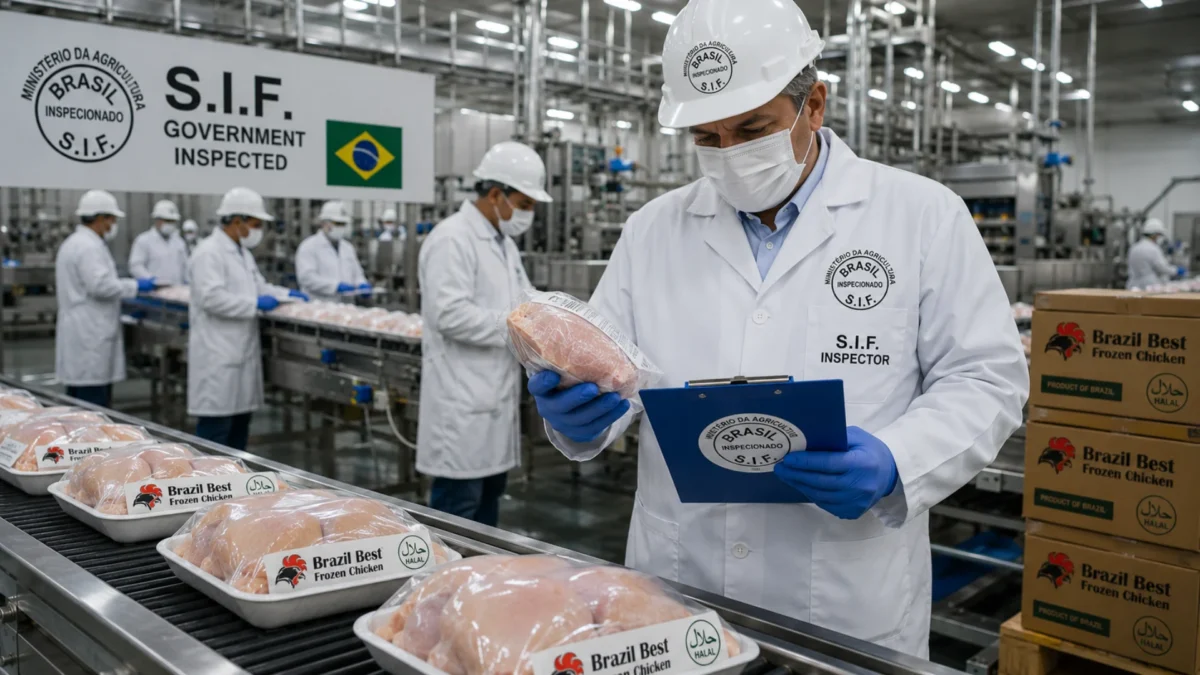
SIF, the Serviço de Inspeção Federal, or Federal Inspection Service, is the operational arm. SIF inspectors are the ones physically present in registered facilities. They monitor slaughter, processing, packaging, and cold chain handling. They approve lots before export and issue the documentation that accompanies each shipment.
The SIF number assigned to a registered facility is the thing importers should be asking for. It’s the identifier that proves the facility has passed inspection and is authorized to export. Without it, nothing leaves Brazil legally.
So when a supplier says “MAPA certified,” what they should mean is: registered with SIF under DIPOA’s oversight, within the MAPA regulatory framework. If they can’t produce a SIF number, the claim is just marketing.
What MAPA Certification Means in Practice for Chicken Exporters
Registration and compliance under this system isn’t a one-time event. It’s an ongoing process, and that’s actually a feature, not a bureaucratic annoyance.
The Approval Process: Registration, Audit, and the Eligible Establishment List
Before a Brazilian chicken processor can export a single gram of poultry, they have to get through a multi-step registration process:
Step 1: Application and initial compliance review
The facility applies for SIF registration and submits documentation covering its sanitation practices, facility layout, processing equipment, hygiene procedures, and supply chain records. SIF reviews all of this against Brazil’s regulatory requirements.
Step 2: Facility inspection by DIPOA
If the application clears the initial review, DIPOA inspectors conduct a physical audit of the facility. They check for compliance with sanitary and technical standards, equipment cleanliness, temperature controls, worker hygiene protocols, animal welfare during processing. If they find problems, the facility has to fix them before registration is granted.
Step 3: Addition to the eligible establishment list
Once the facility passes, MAPA adds it to the official list of establishments authorized to export. This list is public. MAPA publishes it, and destination country authorities, including the USDA, EU food safety bodies, and Gulf customs authorities, reference it when clearing shipments.
Step 4: Ongoing inspections
Registration doesn’t end after the first approval. SIF inspectors are present in facilities regularly, and DIPOA conducts periodic audits. If standards slip, facilities can be suspended or delisted. That’s what keeps the system meaningful.
What the SIF Seal on Packaging Tells an Importer
Every carton of halal frozen chicken that leaves a legitimate Brazilian exporter will carry the SIF seal. This seal, which is applied in a way that breaks if the package is opened, tells you:
- The facility was government-registered and inspected
- The specific lot was approved by an on-site SIF inspector before export
- The product met Brazil’s hygiene and quality standards at the time of packing
The seal isn’t decorative. It’s a traceability point. The SIF number on the seal connects back to a specific registered facility on MAPA’s eligible list.
How MAPA Coordinates With Destination-Country Authorities
Brazil doesn’t operate in isolation. MAPA maintains bilateral veterinary agreements with importing countries, which is how Brazilian chicken gets access to regulated markets in the first place.
For example, the EU’s audits of Brazilian poultry facilities are coordinated through MAPA. Saudi Arabia’s SFDA works with MAPA when approving Brazilian exporters for the Saudi market. When the UK re-evaluated Brazilian poultry access, it was MAPA and DIPOA that conducted the corrective measures audit.
This coordination is what allows frozen chicken drumsticks, whole chickens, and other cuts to move into highly regulated import markets, markets that don’t accept just any paperwork.
What Importers Should Verify Before Placing an Order
This is the practical part. Knowing how the system works is only useful if you apply it when you’re evaluating a supplier.
How to Check a Supplier’s MAPA Approval Status Before Ordering
MAPA publishes its eligible establishment list publicly. You can look up a facility by its SIF number and confirm whether it’s currently authorized to export and to which markets. If a supplier claims MAPA registration but can’t give you a SIF number, or if the number doesn’t appear on the list, that’s a problem.
Some destination countries also publish their own lists of approved Brazilian establishments. Saudi Arabia’s SFDA, Malaysia’s JAKIM-aligned authorities, and Chinese customs (GACC) all maintain registers of Brazilian facilities approved for their market specifically. A Brazilian supplier authorized to export to China isn’t automatically authorized to export to Saudi Arabia. They’re separate approvals.
Key Documents: SIF Seal, CSI Certificate, and Health Attestation
For any shipment of Brazilian chicken, you should receive:
The SIF seal on product packaging, with the facility’s SIF number.
The International Animal Health Certificate (CSI); this is issued by SIF per shipment and attests to the health status of the animals, the conditions of the facility, and compliance with feed and treatment standards. It’s a shipment-level document, not a facility-level one.
The health attestation, this accompanies the CSI and covers specific conditions required by your destination country (for example, Salmonella testing results for EU markets, or specific halal certification documentation for GCC markets). For products like chicken breast fillets going into Saudi Arabia, you need both the SIF documentation and the halal certificates from a Saudi-approved certifier.
MAPA’s export authorization for the specific product category, if your destination country requires it.
Common Supplier Documentation Errors, and How to Spot Them
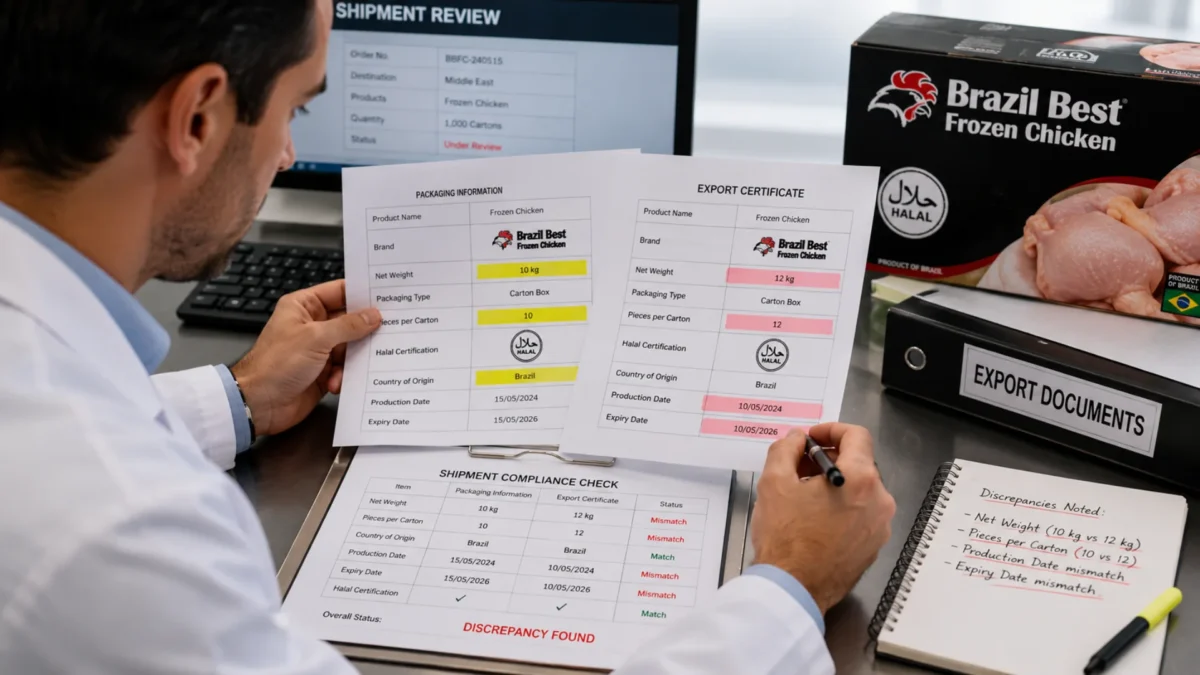
The most common mistake: suppliers provide facility-level certification when you need shipment-level documentation. A facility being registered with SIF is not the same as a specific shipment being certified for export. You need both.
Second most common: outdated eligible establishment lists. MAPA does update its lists, and facilities can be temporarily suspended or delisted. Always verify against the current published list, not a PDF someone emailed you last year.
Third: mismatched SIF numbers between the packaging seal and the supporting documents. This is rare but it happens, usually in logistics errors. If the numbers don’t match, don’t accept the shipment until it’s clarified.
The Bottom Line for Importers
MAPA, SIF, DIPOA- it sounds like alphabet soup until you understand how the pieces fit. MAPA sets the rules. DIPOA runs the department. SIF puts inspectors on the floor and signs the documents that follow your shipment around the world.
When a supplier says they’re “MAPA certified”, you now know what to actually ask for: the SIF registration number, the eligible establishment confirmation, and the shipment-level CSI. Those three things tell you whether you’re dealing with a facility that can actually deliver what it’s promising.
At Brazil Best Frozen Chicken, all our products, from chicken wings to whole birds to specialty cuts, ship with complete MAPA/SIF documentation. We’ve been doing this long enough to know that clean paperwork is as important as the product inside the carton.
If you want to verify our credentials or talk through what documentation you’ll need for your specific market, get in touch with our team. We’ll walk you through it before you place a single order.
FAQs
What is MAPA in Brazilian chicken exports?
MAPA is Brazil’s Ministry of Agriculture, Livestock, and Food Supply. It’s the federal authority that oversees the regulatory framework for all animal product exports from Brazil, including the SIF inspection system and DIPOA.
What is the difference between MAPA and SIF?
MAPA is the ministry; SIF is the Federal Inspection Service that operates under it. SIF inspectors physically audit facilities, approve lots for export, and issue the documentation that clears shipments internationally.
How do I check if a Brazilian chicken supplier is MAPA approved?
Ask for the supplier’s SIF registration number and check it against MAPA’s publicly available eligible establishment list. You can also cross-reference with your destination country’s own approved Brazilian supplier registry.
What documents prove MAPA compliance for a chicken shipment?
You need the SIF number on product packaging, the International Animal Health Certificate (CSI) issued per shipment, and any destination-specific health attestations. For halal markets, you also need halal certification documents from a recognized certifying body.
Does MAPA certification guarantee halal status?
No. MAPA certification covers food safety, sanitation, and export compliance under Brazilian law. Halal certification is a separate process managed by Islamic certifying bodies like FAMBRAS or CDIAL. Both are needed for chicken going into Muslim-majority markets.