

Where to Buy Frozen Whole Chicken
January 17, 2025
What Is MAPA Certification for Brazilian Chicken Exports
July 9, 2026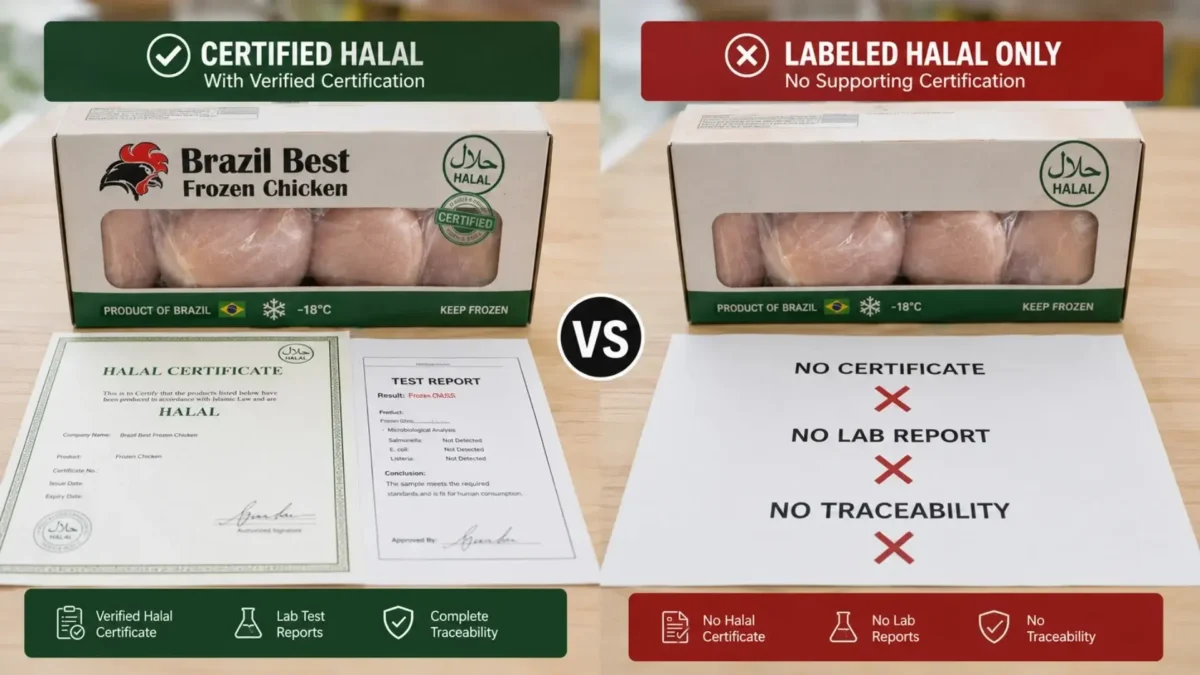
If you’ve been sourcing frozen chicken for more than five minutes, someone’s already told you to “make sure it’s halal-certified”. But what does that actually mean in practice? What documents should you be asking for? And what happens if you get it wrong?
This guide answers those questions without the runaround. Because honestly, a lot of content out there explains halal for consumers, not for importers sitting across a negotiating table trying to clear a 20-foot container at Jeddah port.
What Halal-Certified Frozen Chicken Actually Means
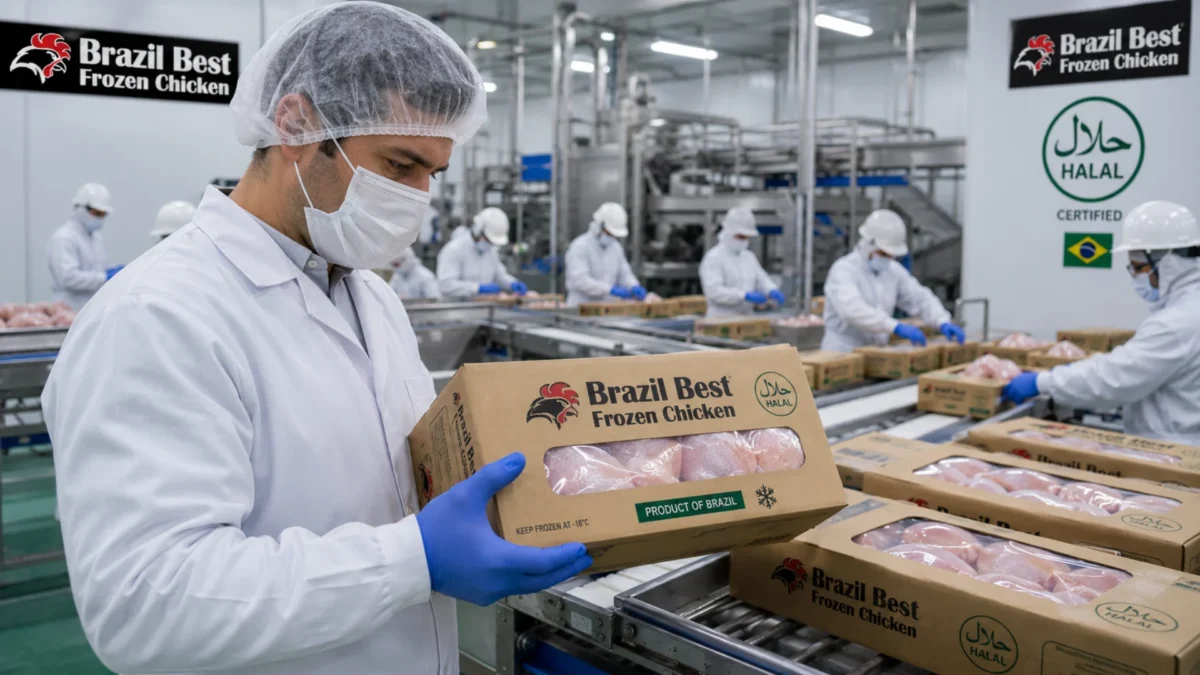
Let’s start at the beginning, because there’s a lot of confusion between halal-labelled and halal-certified, and they’re not the same thing.
Definition Under Islamic Law
Halal means permissible under Islamic law. For chicken specifically, that permissibility covers three main areas.
First, the bird has to be slaughtered by a Muslim who recites the tasmiyah, the blessing, either per bird or per batch, depending on the certifying body’s standards. The bird must be alive at the point of slaughter. Blood has to drain fully from the carcass. No cross-contamination with haram (forbidden) substances, like pork derivatives or alcohol-based additives, at any stage of processing.
Second, the feed matters too. Animals raised on feed containing animal by-products from prohibited sources don’t qualify.
Third, the processing environment has to be clean and free of contamination. Which means a facility that processes both halal and non-halal products needs dedicated lines, dedicated equipment, or dedicated shifts, and all of this gets audited.
How Certification Differs From “Halal-Labelled” Products
Here’s where importers get burned. A product with “halal” printed on the box isn’t automatically certified. Certification means a recognized third-party Islamic authority has audited the slaughterhouse, verified the slaughter process, inspected the facility, and issued a time-bound certificate.
Brazil does this well. The main certifying bodies operating here, FAMBRAS Halal, CDIAL Halal, and SIIL Halal, are internationally recognized and regularly audit themselves. They don’t just stamp a piece of paper; they put inspectors on the floor.
If a supplier can’t hand you a certificate with a certifier name, a certificate number, a scope of products, and an expiry date? That’s not certification. That’s a label.
Why Halal-Certified Frozen Chicken Matters Specifically for B2B Importers
You might think of halal certification as a religious requirement, and it is, but for importers, it’s also a legal and commercial one. Here’s what that means on the ground.
Customs Clearance Requirements by Region
Different markets have different rules, and they’re stricter than most buyers expect.
In Saudi Arabia, the SFDA requires both a Halal Certificate and a Halal Shipment Certificate from a certifying body approved by the Saudi Halal Centre. One document isn’t enough. Both have to match the shipment.
In the UAE, you need GSO 2055-compliant certification. The Emirates Authority for Standardization and Metrology (ESMA) maintains its own list of accepted certifiers. Not all Brazilian certifying bodies make that list, so you need to check before you book the container.
Malaysia recognizes JAKIM as the gold standard. If you’re importing there, your Brazilian supplier needs certification from a body that JAKIM has accepted — and JAKIM publishes that list publicly.
Egypt, Kuwait, Bahrain, Oman all have their own requirements, and they do check. Ports in the Gulf region have rejected full containers for missing or mismatched certification documents. That’s not a small problem, that’s a very expensive problem.
Contractual and Liability Risks of Non-Certified Imports
This is the part nobody talks about enough. When you import chicken that’s supposed to be halal and it turns out the certification was expired, unrecognized, or fraudulent, the liability falls on you, not the supplier, not the shipping company, you.
Retailers and distributors in Muslim-majority markets have been hit with product recalls and reputational damage over this. Some have lost long-term contracts. A few have faced legal action under local consumer protection laws.
Getting certification right isn’t about being careful. It’s about not setting yourself up for a crisis six months after the shipment lands.
Which Destinations Legally Require It
This isn’t just about what your buyers prefer. Several countries legally bar the entry of poultry products that lack valid halal certification from recognized bodies. Saudi Arabia, the UAE, Malaysia, Indonesia, and Kuwait are the main ones. Others, like Egypt and Bangladesh, require it for most commercial channels even if the legal framework is slightly looser.
If you’re sourcing halal frozen chicken for any of these markets, certification isn’t optional. It’s the ticket to entry.
How to Verify Halal Certification When Sourcing From Brazil
Brazil is the world’s largest exporter of halal meat. According to ABPA data, over 40% of Brazil’s poultry exports are halal-certified, and the country ships to more than 160 countries. That’s a lot of volume, which also means you need to know how to separate the legitimate suppliers from the ones just claiming the label.
Recognized Certifiers: FAMBRAS, CDIAL, SIIL (What Each Covers)
FAMBRAS Halal is one of the oldest and most widely recognized halal certification bodies in Brazil. It’s accepted in many Gulf and Southeast Asian markets and conducts regular facility audits.
CDIAL Halal operates under strict Islamic supervision and is recognized by several GCC authorities. Its certificates include traceability from farm to export.
SIIL Halal is newer but growing in acceptance, particularly in Southeast Asian markets.
When a Brazilian supplier hands you a halal certificate, check the issuing body against the approved list maintained by your destination country’s authority. If the certifier isn’t on that list, the certificate won’t clear customs, even if everything else checks out.
Documents to Request Before Placing a Bulk Order
Before you commit to any volume, ask for these:
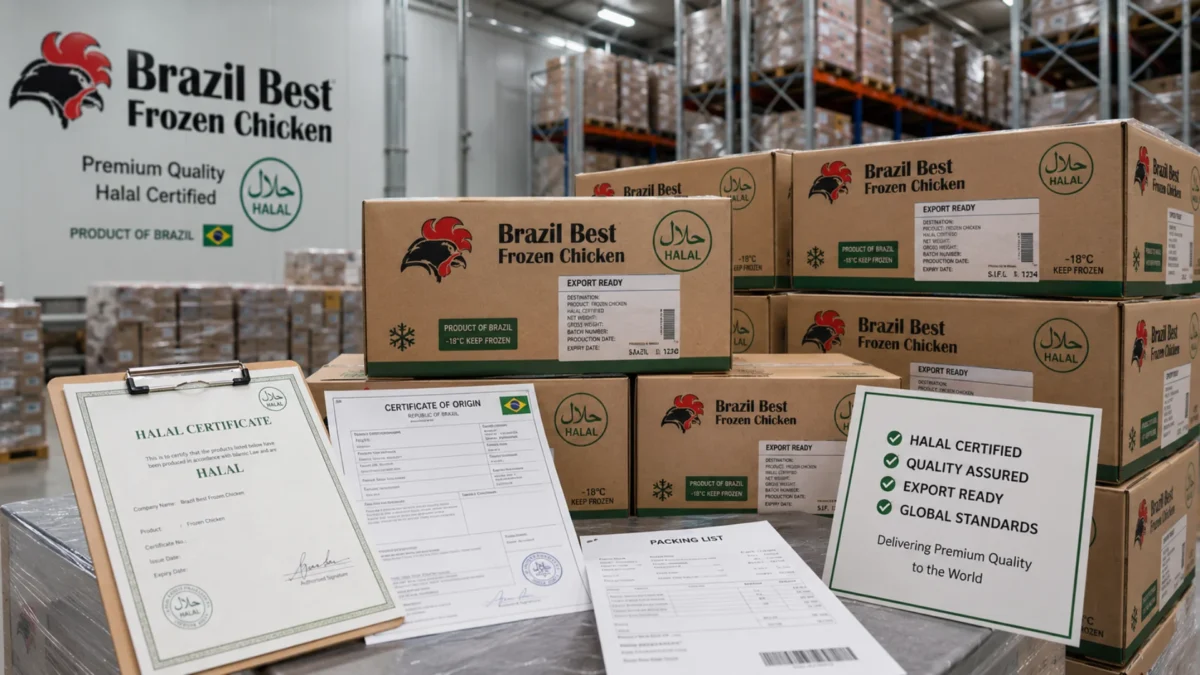
- The halal certificate (with certifier name, issue date, expiry, and scope of products)
- The halal shipment certificate (issued per consignment, not per facility)
- The SIF registration number
- SGS or third-party inspection reports, if available
For products like frozen whole chicken or chicken breast fillets, all four documents should be standard. If a supplier resists providing them, that’s your answer.
Red Flags: Expired Certificates, Unrecognized Bodies, Missing Shipment-Level Docs
Watch for these:
Expired certificates. Halal certificates are time-bound. A certificate issued in 2022 doesn’t cover a 2025 shipment. Always check the expiry.
Facility-level certificates are used as shipment certificates. They’re not the same. A facility can be certified; that doesn’t mean every shipment from it automatically is.
Certifying bodies with no web presence or official registration. Legitimate certifiers are transparent about their auditing processes and internationally registered.
Blanket claims without documentation. “We’re halal-certified” is not documentation. Ask for the PDF.
Getting This Right Is the Whole Job
Look, most of the mistakes importers make around halal certification aren’t from ignorance; they’re from moving too fast. Someone says the supplier is certified, the price is good, the timeline works, and the documentation question gets skipped.
That’s the moment that costs you. Whether it’s a container sitting at port while you try to fix missing paperwork, or a retail partner in Kuwait pulling your product because someone raised a question about the certificate, it all comes back to the documentation you requested (or didn’t) before you ordered.
Brazil is genuinely one of the best sourcing countries for halal frozen chicken. The oversight is real, the certifying bodies are credible, and the export infrastructure is built for this. You just have to know what to ask for.
If you’re ready to source halal-certified frozen chicken from Brazil with full documentation included, get in touch with our team. We’ll make the paperwork the easy part.
FAQs
What does halal-certified mean for frozen chicken?
It means the chicken was slaughtered by a Muslim following Islamic requirements, blood was fully drained, and the product was processed without contact with haram substances — all verified by a third-party Islamic authority.
Who issues halal certificates for Brazilian chicken exporters?
The main recognized bodies are FAMBRAS Halal, CDIAL Halal, and SIIL Halal. Each is accepted in different destination markets, so the right certifier depends on where you’re importing.
Is halal certification legally required for importing frozen chicken?
In several countries, including Saudi Arabia, the UAE, Malaysia, and Kuwait, yes, it’s a legal requirement backed by border enforcement. In others, it’s a commercial necessity because buyers won’t accept uncertified products.
How do I verify a halal certificate is authentic?
Cross-reference the certifier name against your destination country’s official approved list (SFDA for Saudi Arabia, ESMA for UAE, JAKIM for Malaysia). Then confirm the certificate hasn’t expired and that it covers the specific product category.
Does Brazil Best Frozen Chicken carry a verified halal certification?
Yes. All our frozen chicken products are halal-certified by internationally recognized bodies and SIF-approved for export. We provide full documentation with every order.
