What Does IQF Frozen Chicken Mean and Why Buyers Prefer It
July 22, 2026
What Is the Difference Between Fresh Frozen and Deep Frozen Chicken
July 28, 2026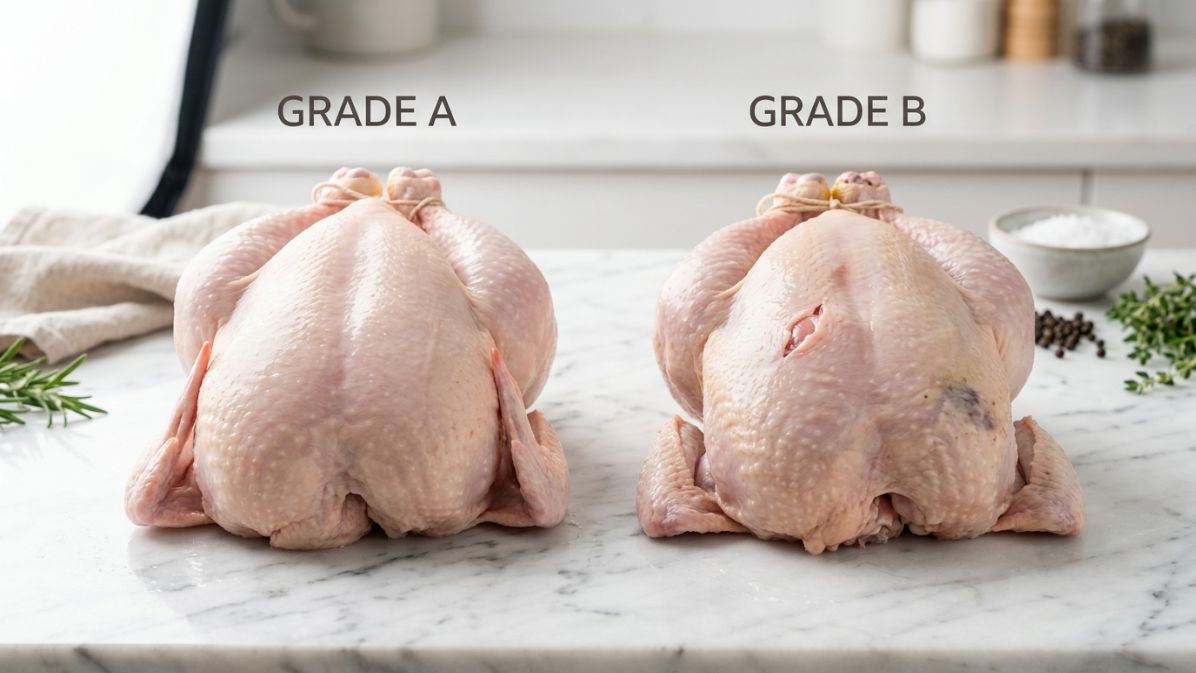
Most buyers ask for “Grade A” without knowing exactly what they’re asking for. And that’s fine — until the shipment arrives and there’s a dispute about whether what you received actually meets the spec you agreed to.
Grade A and Grade B are real, defined classifications. They’re not vague quality tiers that suppliers can interpret loosely. There are specific criteria, specific tolerances, and specific use cases where one grade makes more commercial sense than the other.
Understanding the difference doesn’t just help you communicate better with suppliers; it can change your pricing logic, your end-use strategy, and what you write into your purchase contract.
How Chicken Is Graded for Export (Criteria)
Grading means the physical condition of the meat: how it looks, whether the structure is intact, and whether it’s ready for retail, food service, or processing without additional sorting.
What Inspectors Actually Evaluate
When a grader assesses a chicken carcass or cut for export, they’re checking five things: fleshing (how much meat covers the bone frame), fat covering under the skin, skin condition, bone integrity, and the presence of defects like bruising, discoloration, torn skin, or retained feathers.
A piece passes Grade A when all five of those factors meet the top-tier standard. Any defect that falls below that threshold, even one, and the piece is downgraded to Grade B.
How Brazilian SIF Grading Aligns With International Standards
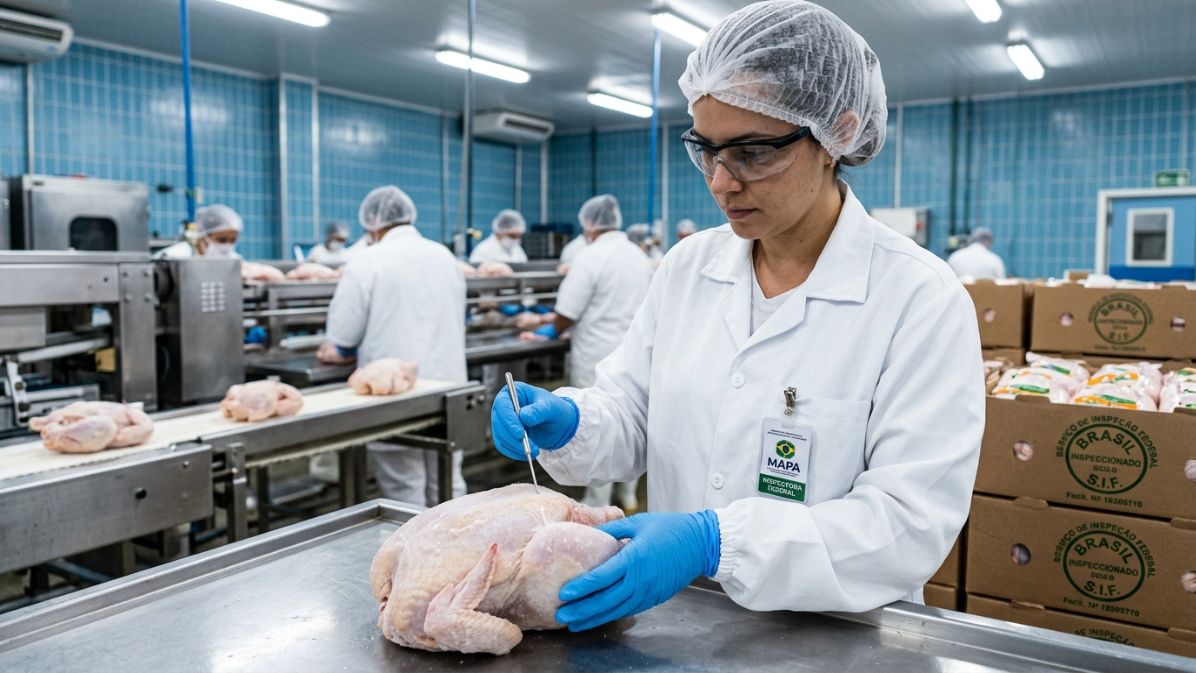
Brazilian exporters operate under SIF (Federal Inspection Service) oversight, which sets grading standards that align closely with international norms used in the EU, Gulf markets, and Asian import regulations. The core criteria like flesh coverage, skin integrity, bone condition, and absence of defects, are consistent across these frameworks.
It means a SIF-graded export certificate that specifies Grade A carries weight in most major importing markets because the inspection standard is recognized and audited. It’s not a self-declared label. A SIF inspector has physically evaluated the lot.
This is different from some markets where grading is processor-declared without third-party verification. With Brazilian SIF exports, you have an independent inspector behind the grade on the documentation, which is part of what makes Brazilian chicken competitive in regulated import markets.
Why Grading Applies to the Lot, Not Just Individual Pieces
The grade on your export certificate describes the lot, not a guarantee that every single piece in a carton is perfect.
Tolerance levels exist at lot level. A Grade A lot designation allows a small percentage of pieces that technically fall slightly below the Grade A threshold, within defined tolerances. This is normal and standard. What it means for you as an importer is that your contract should specify the tolerance level alongside the grade, not just the grade alone. Knowing this also helps you avoid grade disputes on arrival when a small percentage of pieces show minor defects.
Grade A vs Grade B: What the Difference Means in Practice
Here’s where it gets concrete.
Grade A: Standards, Appearance Requirements, and Which Markets Require It
Grade A chicken, whole birds or cuts, must have well-developed flesh coverage for the frame, a layer of fat between skin and meat, no broken or disjointed bones, no exposed flesh from skin tears, no bruising or discoloration, and no retained feathers.
The visual standard is high. Grade A product is ready to go directly into retail packaging, food-service distribution, or meal preparation without additional sorting, trimming, or quality checks on the buyer’s side.
Markets that require Grade A for imported poultry include the EU (by default for retail channels), Gulf states like Saudi Arabia and UAE for retail and food-service supply chains, South Korea, Japan, and most regulated food-service import channels globally.
If your buyers are hotels, restaurant chains, supermarket retailers, or food-service distributors, Grade A is non-negotiable. Their own quality standards, and sometimes their import regulations, don’t leave room for anything else.
Grade B: What Defects Are Permitted and Where It’s Commercially Appropriate
Grade B permits defects that wouldn’t pass the Grade A threshold: slight skin tears, minor bruising or discoloration, small areas of exposed flesh, minor dents or deformities in the bone structure that don’t significantly affect the cut’s usability.
Critically, Grade B chicken is still fully safe to eat. It passes food safety inspection. What it fails is the cosmetic and structural standard that makes it suitable for direct retail.
Where Grade B is commercially appropriate: processing operations that further cook, debone, mince, or render the product before it reaches the consumer. Chicken going into ready meals, canned products, fast-food chain processing, or animal feed manufacturing doesn’t need intact skin or pristine presentation. The raw material just needs to be safe, adequately fleshed, and accurately specified.
Some buyers in markets where chicken is heavily processed or spiced before sale — certain African markets, institutional catering operations in Asia, also accept Grade B for cost reasons, provided the safety documentation is in order.
Price Difference, Yield Impact, and Total Cost Per Kg
Grade B is typically 10–20% cheaper per kg than Grade A product of the same cut from the same origin. On a 20-tonne container, that price difference is significant.
Here’s the calculation you need to do before deciding Grade B is the better deal: what’s the additional cost on your end to sort, trim, or process Grade B product to a usable state? If your operation or your buyer absorbs additional labor and yield loss to compensate for Grade B defects, the actual cost-per-kg-of-usable-product can close the gap significantly.
Grade B makes financial sense when your downstream processing eliminates the appearance and structural defects that differentiate it from Grade A, and when the raw material cost saving is larger than the additional processing cost. If you’re selling into a channel where the product goes straight to the consumer’s plate, Grade B doesn’t make financial sense regardless of the price difference.
Choosing the Right Grade for Your Market and End-Use
This is the decision that actually matters, and it’s simpler than it sounds once you know your downstream.
Retail and Food Service: Why Grade A Is Non-Negotiable
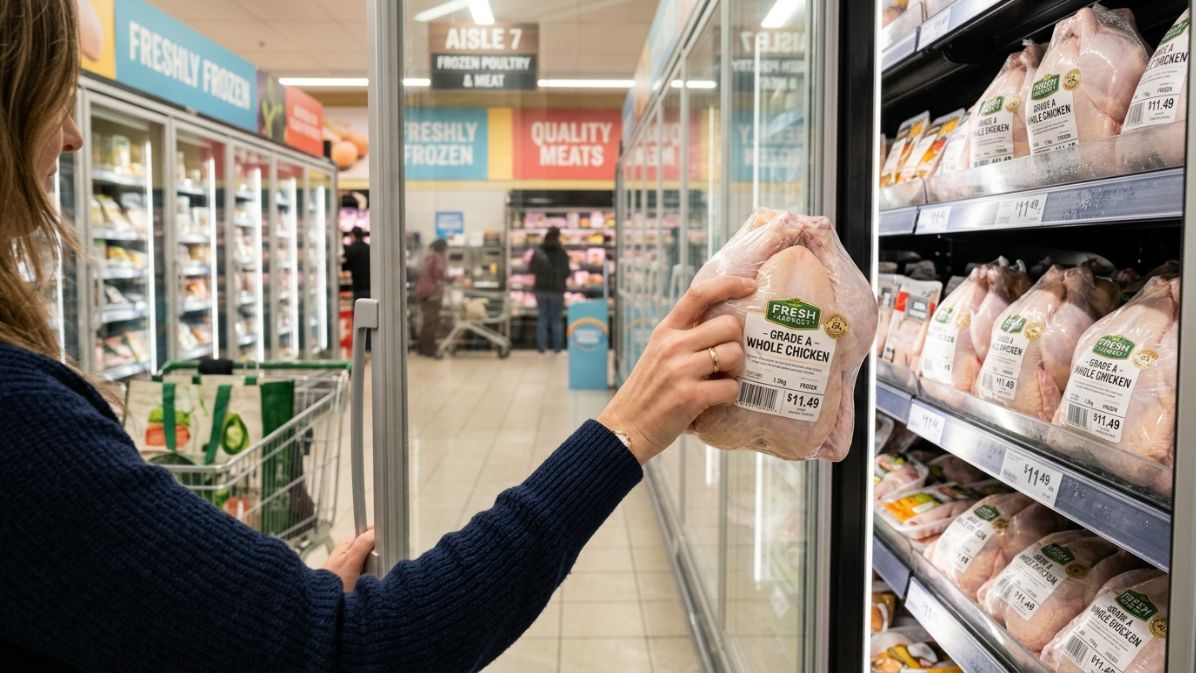
Frozen whole chicken destined for supermarket display, chicken drumsticks going into food-service distribution, chicken wings sold into restaurant supply chains- these all need Grade A. The buyer at the other end of your supply chain has a direct consumer or a quality-conscious chef who will notice torn skin, bruising, or exposed flesh.
More to the point, many retail buyers in GCC markets, Southeast Asia, and Europe specify Grade A in their supplier agreements. Delivering Grade B into a Grade A contract isn’t just a quality issue — it can be a contractual breach and a commercial relationship problem.
Processing and Further Manufacturing: When Grade B Makes Financial Sense
If your buyer is a food manufacturer producing ready meals, a deboning operation that’s going to strip the meat off the bone anyway, or a rendering facility, they generally don’t need Grade A. What they need is an accurately graded product with clean food safety documentation, delivered at a competitive price.
Chicken gizzards, chicken livers, and offal products are typically not graded the same way as cuts, but for main cuts going into processing, Grade B at an honest price point is a perfectly legitimate commercial choice.
The conversation with your supplier in this case isn’t “give me Grade A”, it’s “give me accurately graded Grade B with declared defect tolerances, verified food safety documentation, and a price that reflects the actual grade”.
What to Specify in Your Purchase Contract
This is where most importer headaches come from. Contracts that just say “Grade A frozen chicken” without further specification leave room for interpretation, and dispute.
Your purchase order and contract should specify: the grade designation (A or B), the tolerance percentage at lot level, the inspection standard (SIF, USDA-equivalent, or bilateral agreement standard), how grade is verified (third-party inspection like SGS on shipment, or reliance on origin certificate), and what happens if the shipment on arrival falls below the specified grade, who bears the cost, what’s the resolution process.
Getting this written down before the container ships is much easier than arguing about it when the product is at port and you’re watching a clock.
Get the Grade Right Before You Order
Grade A isn’t always the right choice. Grade B isn’t always the wrong one. What matters is matching the grade to the end-use, specifying it correctly in the contract, and verifying it with third-party documentation, not just taking a supplier’s word for it.
At Brazil Best Frozen Chicken, all our frozen chicken products are SIF-inspected with grade and lot-level tolerance specified in export documentation. If you need Grade A for retail or food-service, we can supply it with the paperwork to back it up. If you need accurately graded Grade B for processing, we can supply that too, with the same documentation integrity.
Talk to our team before you finalize your order. Contact us, and we’ll put the right grade specification in writing from day one.
FAQs
- What is Grade A frozen chicken?
Grade A is the highest export quality classification for frozen chicken. It requires well-developed flesh, intact skin without tears, no broken bones, no bruising or discoloration, and no retained feathers. It’s suitable for direct retail and food-service use without further sorting.
- What is Grade B frozen chicken?
Grade B allows minor defects like slight skin tears, small areas of bruising or discoloration, minor bone deformities, that fall below Grade A standards. Grade B is still food-safe and fully inspected, but is typically used in further processing rather than direct retail.
- Which markets require Grade A frozen chicken imports?
EU retail channels, GCC supermarket and food-service supply chains, Japan, South Korea, and most regulated Western food-service channels require Grade A. Processing and manufacturing buyers in many markets accept Grade B at appropriate price points.
- Is Grade B chicken safe to eat?
Yes. The grade classification is about appearance and structural integrity, not food safety. Grade B chicken passes the same food safety inspections as Grade A. The difference is cosmetic and structural, not hygiene-related.
- How do I specify the grade correctly in a purchase contract?
Specify the grade (A or B), the lot-level defect tolerance percentage, the inspection standard (SIF or equivalent), the third-party verification method, and the dispute resolution process if grade on arrival doesn’t match the specification on the certificate.