What Is the Difference Between Grade A and Grade B Frozen Chicken Exports
July 25, 2026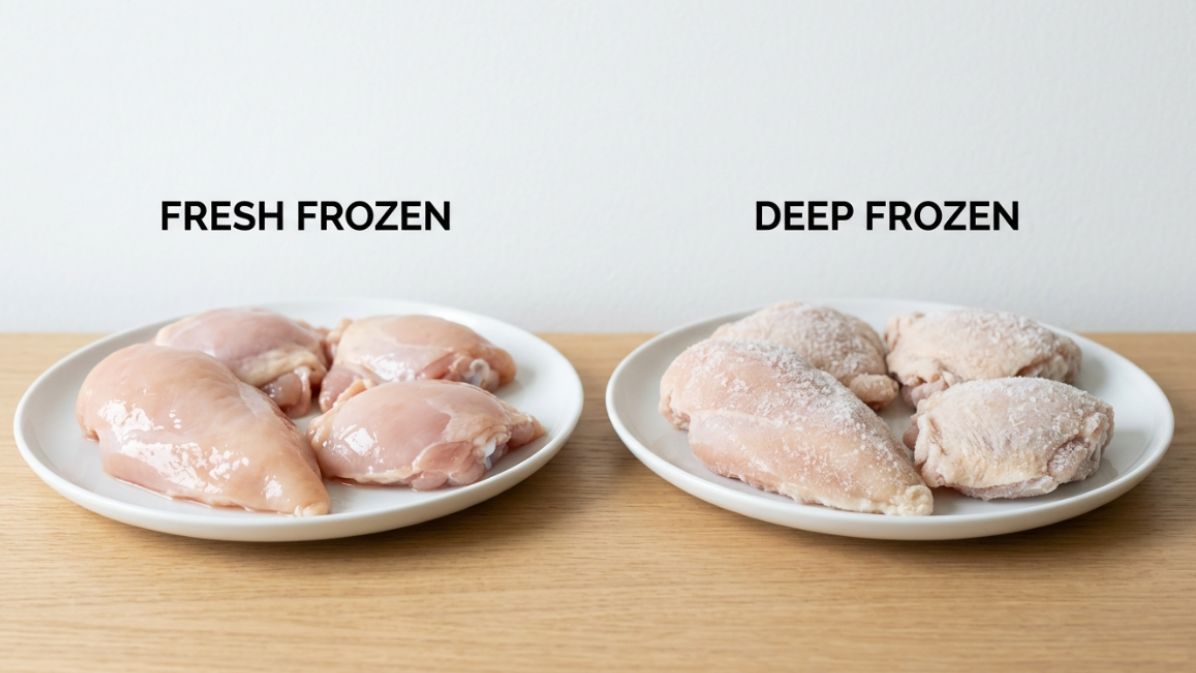
“Fresh frozen” sounds like a contradiction. And that’s part of the problem: the term gets used loosely, which creates real confusion when an importer specifies one thing and receives something slightly different, or when a buyer in Dubai expects product that’s been handled a certain way and gets something that doesn’t match.
Fresh frozen chicken has been frozen quickly after processing but stored and transported at temperatures just below 0°C. Deep frozen chicken has been taken to -18°C or colder and kept there throughout the entire cold chain.
Those are not the same thing, and the difference affects shelf life, texture on thaw, which trade routes the product can realistically survive, and what your destination market’s customs authority will accept.
What Fresh Frozen Chicken Means
Despite the name, “fresh frozen” is a real category with specific temperature implications, it’s not marketing language for “recently frozen”.
Temperature Range: 0°C to -4°C and How Quickly It Must Move
Fresh frozen chicken is held at temperatures typically between 0°C and -4°C. That’s cold enough to stop most microbial activity and significantly slow spoilage, but not cold enough to freeze the product solid throughout. In some definitions, fresh frozen sits right at the freeze/chill boundary, partially frozen, with ice crystal formation beginning but not complete.
This temperature range extends shelf life from the 2–4 days you’d get from purely refrigerated fresh chicken, to somewhere around 10–30 days depending on the specific handling and how consistently the temperature has been maintained. That’s still a short window in international trade terms.
Shelf Life, Texture, and Where Fresh Frozen Has the Edge

The argument for fresh frozen comes down to texture and eating quality. Because the product hasn’t undergone deep freeze and hasn’t been subjected to large ice crystal formation, the muscle structure is closer to that of never-frozen chicken. The texture after thawing tends to be firmer and less waterlogged than product that’s been deep frozen.
For buyers supplying premium food-service accounts, like hotel kitchens, fine-dining restaurants, quality-driven retail, fresh frozen product can command a price premium precisely because of that texture advantage.
It’s not as dramatic a difference as the fresh-vs-frozen marketing debate implies, but it’s real enough for chefs who cook large volumes to notice.
When Fresh Frozen Is the Right Choice: Short-Haul, Regional Markets
Fresh frozen works for regional supply chains where the transit time is short enough that 10–30 day shelf life is adequate, and where the cold chain infrastructure between origin and destination is reliable enough to hold 0°C to -4°C consistently throughout.
Think: a Brazilian processor supplying a South American distribution network, or a European importer sourcing from nearby origin countries for rapid-turnaround food-service accounts. For intercontinental trade like Brazil to the Gulf, Brazil to China, Brazil to West Africa, fresh frozen is almost never the right call. The transit time alone may exceed the product’s shelf life before it even reaches the destination port.
What Deep Frozen Chicken Means
Deep frozen is the standard for international chicken trade, and there’s a good reason for it.
Temperature Requirement: -18°C or Below and Why It Matters
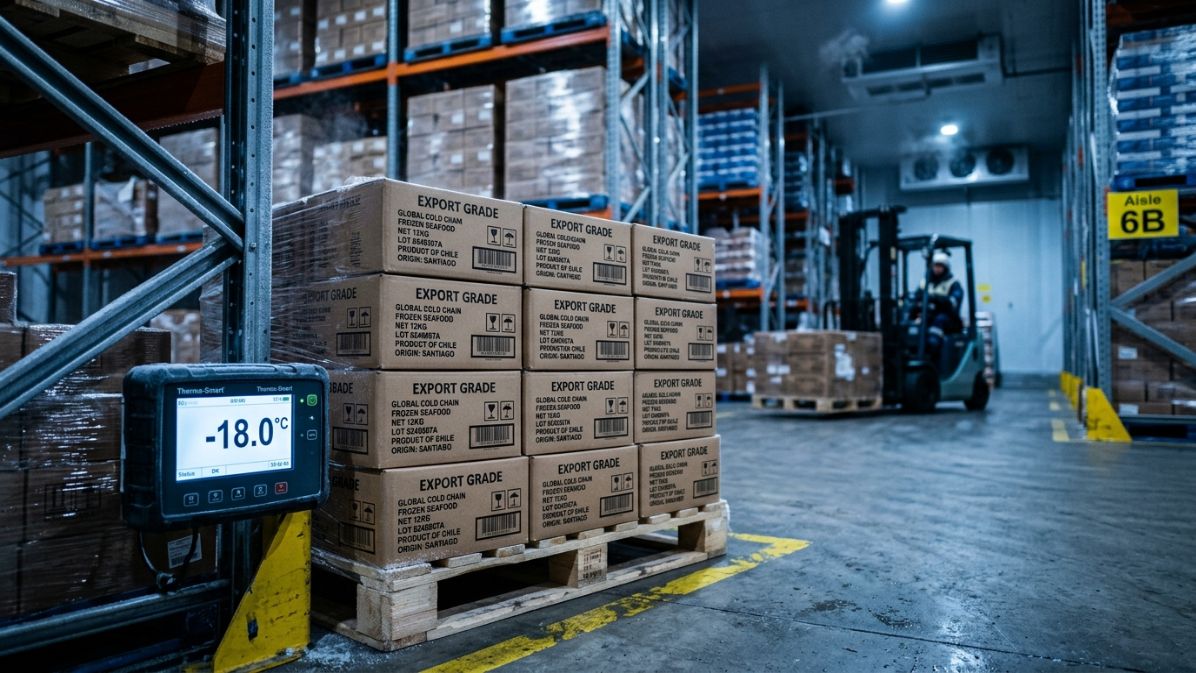
Deep frozen chicken is stored and transported at -18°C or colder throughout the entire cold chain, from the processing facility freezer to the reefer container to the destination cold store. Some Brazilian processors freeze product to -25°C at origin to provide a buffer against minor temperature variation during transit.
At -18°C, microbial activity stops almost entirely. The chemical reactions that cause freezer burn and quality degradation slow dramatically. Product that was frozen correctly and held at -18°C continuously can maintain acceptable quality for 12–18 months for most cuts.
That’s what makes deep frozen chicken viable for global trade. A container leaving Santos port heading to Jeddah, Lagos, or Ho Chi Minh City takes 3–6 weeks at sea. Deep frozen at -18°C handles that without quality loss. Fresh frozen at -2°C does not.
Shelf Life for Long-Haul and Intercontinental Trade
This is straightforward but worth saying clearly. For any trade route where transit time plus destination country distribution time exceeds 30 days, which includes most of Asia, the Gulf, Africa, and longer routes into Europe, deep frozen is the only commercially viable option.
The shelf life math works like this: frozen chicken drumsticks deep frozen at -18°C can hold for up to 18 months from processing date. A 4–5 week ocean transit leaves the buyer with 13–14 months of remaining shelf life to work with in their distribution system. That’s a workable commercial proposition.
The same product handled as fresh frozen would arrive at destination with days of shelf life remaining, if it arrived in acceptable condition at all.
Cold Chain Cost, Reefer Container Specifications, and Port Handling
Deep frozen product requires reefer containers set to -18°C or colder. These are more expensive to operate than standard refrigerated containers. The containers need continuous power, temperature monitoring, and handling by cold-storage-equipped ports at both ends.
Fresh frozen requires refrigerated containers at 0°C to -4°C, which are technically cheaper to run per day. But the product moves faster, the economics depend entirely on route length and volume velocity. On short regional routes with rapid inventory turnover, fresh frozen can be cost-competitive. On long intercontinental routes, the higher per-day reefer cost of deep frozen is offset by the extended shelf life that makes the trade viable in the first place.
For buyers evaluating Brazil as an origin, the cold chain infrastructure is well-established for deep frozen exports, Brazilian processors and freight forwarders run -18°C or colder containers as the default on international lanes.
Which Type Fits Your Import Requirements
Choosing between fresh frozen and deep frozen isn’t a quality preference. It’s a logistics and market reality decision.
Distance and Transit Time: The Deciding Factor
If your transit time from Brazilian port to destination port is under 10 days and your distribution system can move the product within 2 weeks of arrival, fresh frozen might be worth the conversation. This applies to a narrow set of routes.
For everything else, deep frozen is the answer. Not because fresh frozen is worse, it isn’t, on the right route, because the shelf life buffer deep frozen provides is what makes international trade operationally manageable. Buyers and distributors need time to receive, inspect, clear customs, and sell product. Deep frozen gives them that time.
Destination Market Requirements: Some Ports Specify One or the Other
This is worth checking before you place an order. Some destination country import regulations specify which freezing method is acceptable. A few markets only permit “fresh chilled” or “fresh frozen” poultry from approved origins. Others require deep frozen product with a declared minimum shelf life remaining on arrival, often 6 months or more.
Gulf Cooperation Council countries, China, and several Southeast Asian markets specify minimum remaining shelf life at port of entry. Deep frozen product from a SIF-certified Brazilian facility, shipped in a reefer container with verified temperature logs, routinely clears these requirements. Fresh frozen product on a long trade route often can’t meet the minimum remaining shelf life criteria even if it cleared the origin facility correctly.
Check the import requirements for your specific destination country before choosing between the two. Your freight forwarder or a trade compliance advisor can confirm the current standard.
How IQF and Deep Freezing Work Together for Brazilian Exports
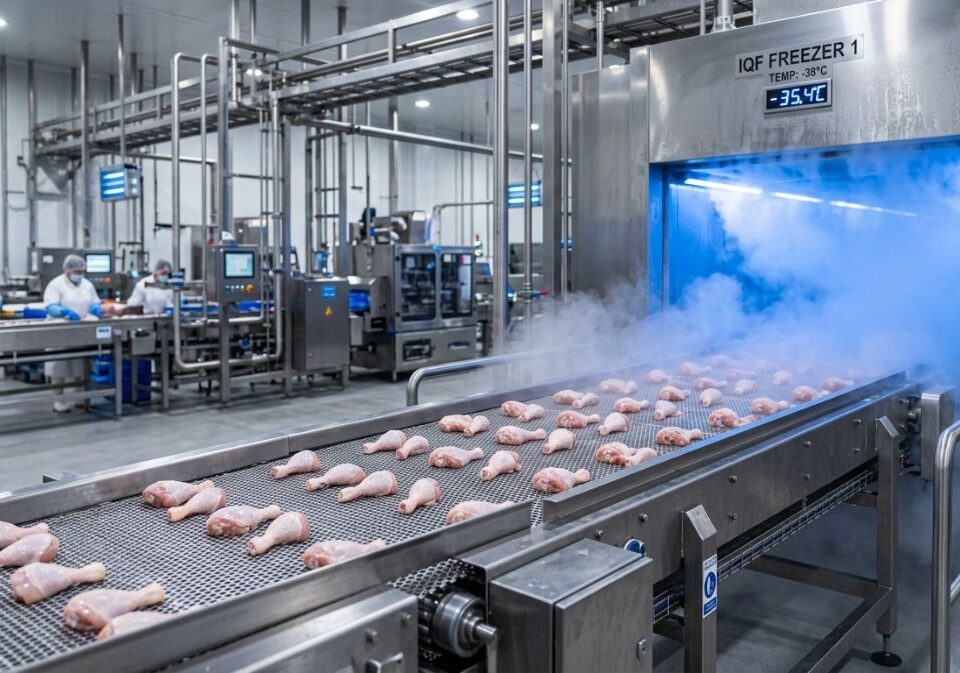
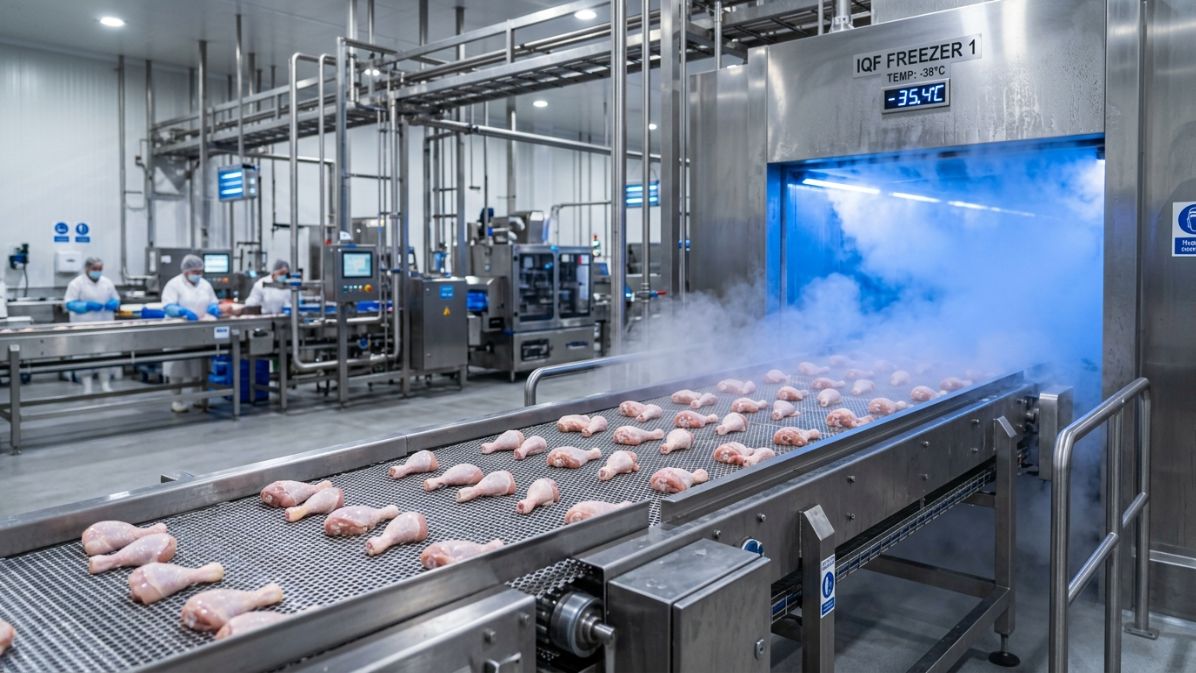
Most Brazilian frozen chicken exports combine both technologies: IQF freezing at the processing stage (freezing each piece individually at -30°C to -40°C) followed by storage and shipment at -18°C deep frozen temperatures.
The IQF process handles the piece-level quality, preventing large ice crystal damage to muscle tissue, protecting drip loss and yield. The deep freeze temperature handles the logistics, giving the product the shelf life to survive intercontinental transit and destination distribution. They solve different problems. If you want to understand IQF in detail, our IQF frozen chicken guide covers the drip loss numbers and what to check on a glazing spec.
The Practical Answer for Most Importers
If you’re sourcing frozen chicken from Brazil for delivery to markets in the Gulf, Asia, Africa, or Europe, you want deep frozen product, stored and shipped at -18°C, with temperature logs that confirm the cold chain hasn’t been broken. That covers over 90% of international import scenarios.
Fresh frozen is a legitimate product category for the right route and the right buyer. But it’s not the default for reason: deep frozen gives you the shelf life, the logistics flexibility, and the regulatory compliance that international trade requires.
At Brazil Best Frozen Chicken, our whole chickens, chicken paws, cuts, and offal products all ship at -18°C with full SIF documentation, temperature-monitored reefer containers, and declared shelf life on the health certificate. If you want to talk through your specific route and what your destination market requires, contact our team; we’ll give you a straight answer.
FAQs
- What is the difference between fresh frozen and deep frozen chicken?
Fresh frozen chicken is held at 0°C to -4°C, partially frozen, with a shelf life of roughly 10–30 days. Deep frozen chicken is stored at -18°C or colder with a shelf life of 12–18 months. The right choice depends on your transit time and destination market requirements.
- Can fresh frozen chicken be shipped internationally?
Only on short routes where transit time is under 10 days and the product can be distributed and sold quickly on arrival. For intercontinental trade lanes — Brazil to Asia, Gulf, or Africa — deep frozen is the standard because fresh frozen product won’t maintain shelf life through a 4–6 week ocean voyage.
- What temperature is deep frozen chicken stored at?
-18°C or colder throughout the entire cold chain, from processing facility to destination cold store. Some Brazilian processors freeze to -25°C at origin to provide a buffer against temperature variation during shipping.
- Does deep freezing affect the taste or texture of chicken?
When done correctly — using IQF freezing at origin to minimize ice crystal damage, followed by -18°C storage — the quality difference between deep frozen and fresh frozen chicken is minimal after proper thawing. The IQF process protects the muscle structure during the initial freeze. For more on how that works, see our IQF chicken guide.
- Which freezing method do Brazilian chicken exporters use?
Brazilian exporters supplying international markets default to IQF deep frozen — pieces frozen individually at -30°C to -40°C, then stored and shipped at -18°C. This combination maximizes quality on arrival and provides the shelf life buffer needed for long-haul trade routes.