What Is MAPA Certification for Brazilian Chicken Exports
July 9, 2026
What Is the Difference Between Grade A and Grade B Frozen Chicken Exports
July 25, 2026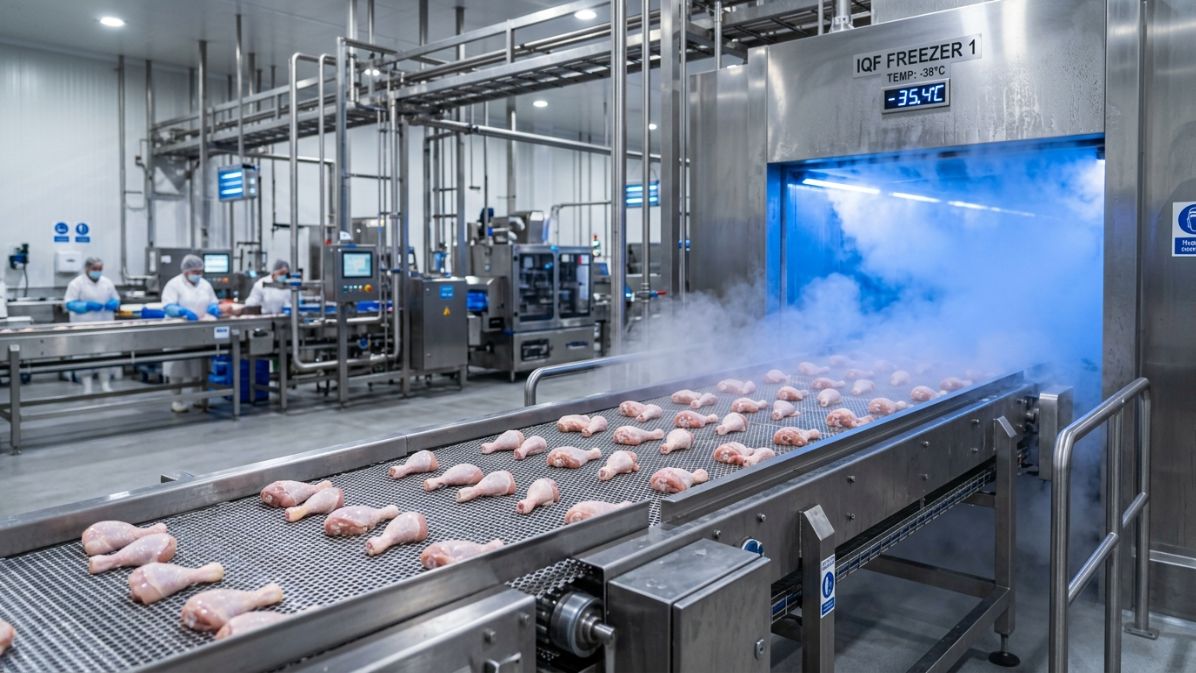
An importer places a bulk order for frozen chicken, the container arrives, and when the product thaws, there’s water everywhere. The chicken’s texture is soft, the yield is off, and the numbers don’t work anymore.
Nine times out of ten, the problem isn’t the chicken. It’s the freezing method. And if nobody explained the difference between IQF and block-frozen when you were placing that order, that’s not your fault, but it is your problem to fix going forward.
IQF frozen chicken means each piece was frozen separately, rapidly, at temperatures between -30°C and -40°C, before packing. It’s that simple to define. But what it means for your yield, your cold chain, and your buyers on the receiving end is where it actually gets interesting.
What IQF Means, and How the Process Works
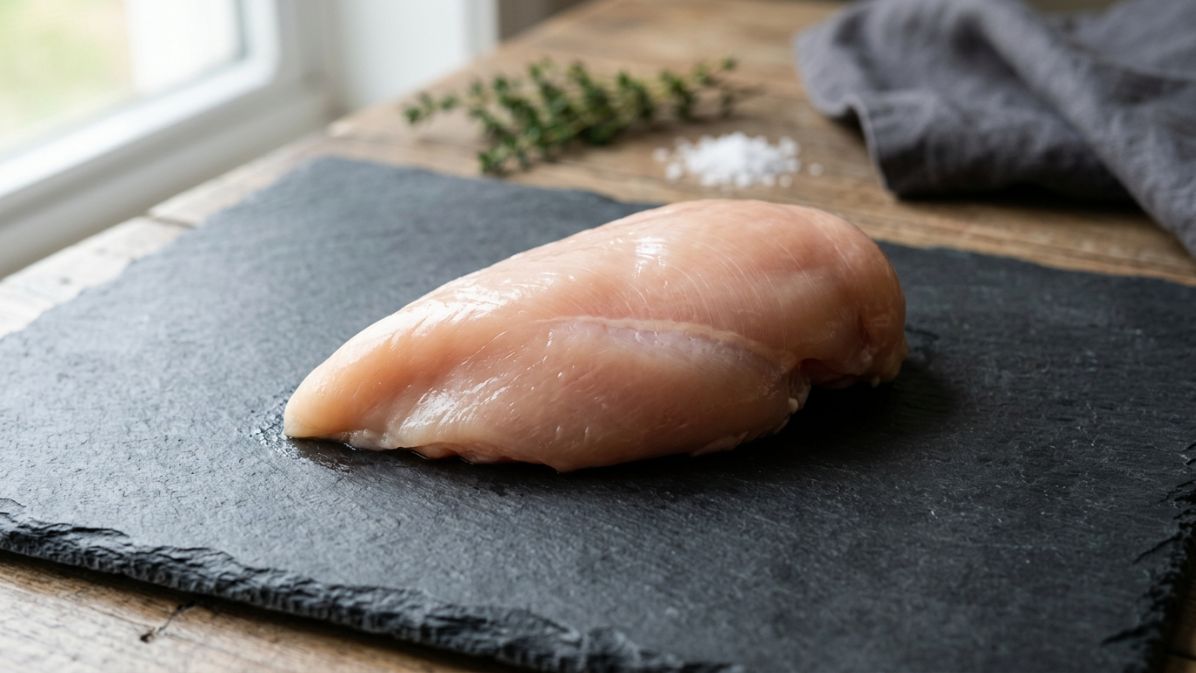
IQF stands for Individually Quick Frozen. Not flash frozen in a pile. Not frozen together and broken apart later. Each piece, whether it’s a chicken breast, a drumstick, or a wing, moves through a freezing tunnel on a conveyor belt, spaced apart, hit with high-velocity cold air until it’s frozen solid as a single unit.
The Freezing Tunnel Process: -30°C to -40°C, Piece by Piece
The IQF tunnel isn’t just a cold room. It’s a precisely engineered environment where cold air circulates horizontally at speed, dropping each piece’s core temperature within minutes, not hours.
Why does speed matter? Because the slower chicken freezes, the more time ice crystals have to grow inside the muscle tissue. Large ice crystals puncture cell walls. When the chicken thaws, the liquid that should stay inside the meat, the moisture that gives it texture and weight, leaks out instead.
IQF essentially skips past the danger zone where ice crystallization does the most damage (-1°C to -4°C) so fast that only tiny micro-crystals form. Those don’t tear cell walls. The meat stays intact.
Why Rapid Freezing Protects Muscle Tissue
Think of it this way. Slowly frozen chicken is like a water balloon that’s been squeezed, the pressure changes everything inside. IQF chicken is more like a water balloon that’s been flash-solidified without any squeezing at all.
That difference shows up when you cook it. Slowly frozen chicken loses moisture during thawing. IQF chicken holds it. The protein structure stays tighter. The texture after cooking is closer to what you’d get from a fresh piece.
For a home cook, that matters a little. For a food-service operation buying 20 tonnes a month, it matters a lot, because what you’re really protecting is yield.
IQF vs Block-Frozen: The Drip Loss and Yield Difference
Block-frozen chicken goes into packaging as a grouped mass and freezes together. To separate pieces, you either thaw the whole block or hack at it. Neither option is ideal when you’re running a production line or a commercial kitchen.
The measurable difference is drip loss, the percentage of weight lost as liquid when frozen chicken thaws. IQF chicken typically loses 2–4% on thaw. Block-frozen or slowly frozen chicken often loses 8–12%.
If you’re buying a container of frozen chicken at, say, 20,000 kg net weight, an 8% drip loss versus a 4% drip loss is a 800 kg difference in usable product. At commercial prices per kg, that’s not a rounding error. That’s a real cost that should factor into your sourcing decision.
Why Importers and Food-Service Buyers Choose IQF
The drip loss number is usually what convinces people. But there are a few other reasons IQF has become the standard for serious buyers.
Portion Control and Inventory Flexibility at Scale
With block-frozen product, you’re committed to using the whole block. You can’t pull three breasts from a frozen mass without thawing everything. For a food-service kitchen running variable menu volumes, that’s waste waiting to happen.
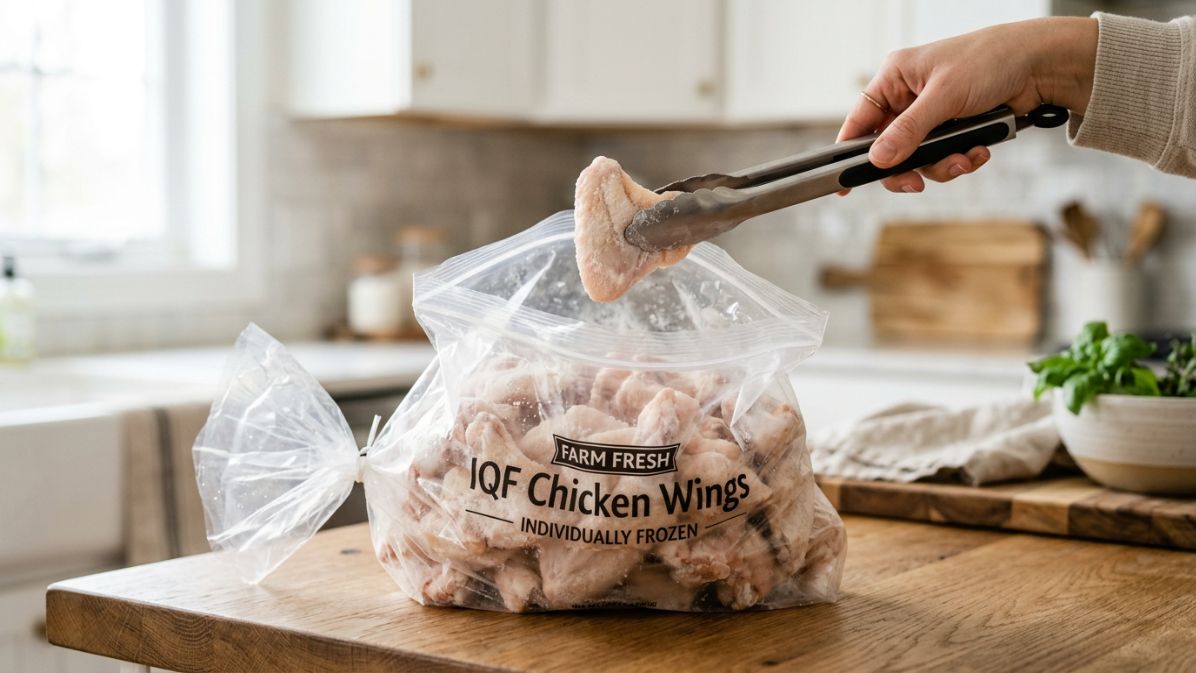
IQF product lets you pull exactly what you need. A kitchen can take 10 pieces from a 5 kg bag without thawing the rest. A distributor can repack to smaller units without breaking the cold chain. A processor can run a portion of a pallet through a production line without staging the rest for next-day use.
At import scale, this also means you can sell to a wider range of buyers, from large-volume food manufacturers down to food-service distributors who need smaller, consistent pick quantities.
Thaw Time, Food Safety, and Cold Chain Performance
Individual pieces thaw significantly faster than a solid block — sometimes 3 to 4 times faster for same-weight portions. In a commercial kitchen, thaw time is operational time. Faster thaw means less advance prep, more flexible scheduling, and lower risk of product sitting in the temperature danger zone (5°C to 60°C) longer than it should.
From a food safety angle, IQF product also has cleaner handling characteristics. Pieces don’t need to be broken apart, reducing physical damage and the handling steps where cross-contamination risk goes up.
Shelf Life, Container Packing Density, and Freight Cost Per Kg
IQF product at -18°C holds well for 12–18 months for most cuts, with minimal quality degradation. That shelf life is what makes long-haul international trade viable. A container leaving a Brazilian port for Shanghai, Jeddah, or Lagos needs product that arrives in excellent condition after 3–6 weeks at sea.
On the freight side, IQF pieces pack more uniformly than irregularly shaped block-frozen product. Better packing density means more usable kg per container cubic metre, which brings your cost-per-kg-delivered down slightly. Not a huge number, but across multiple containers a year, it adds up.
What to Check When Sourcing IQF Frozen Chicken from Brazil
Brazil is one of the world’s largest exporters of IQF poultry. But “IQF” on a spec sheet and genuine IQF quality in the container aren’t always the same thing. Here’s what to verify before you commit.
Glazing Percentage and Net Weight: What’s on the Label vs. What You Receive
Glazing is a thin layer of ice applied to IQF product after freezing to protect it during storage and transit. It’s normal and legitimate. The problem comes when the glazing percentage isn’t disclosed, or when it’s higher than expected.
A product listed as 10% glaze on a whole chicken means 10% of the declared weight is ice, not meat. 20% glaze means you’re paying for a fifth of the product weight in water. Ask for the glaze percentage explicitly. Compare the gross weight to the net meat weight. Make sure your contract specifies which weight you’re paying for, and that the glaze percentage is declared on the commercial invoice and packing list.
Standard acceptable glazing for export IQF chicken runs 5–12% depending on the cut. Above 15% should raise questions.
Temperature Logs, SIF Documentation, and Cold Chain Integrity
Ask for the temperature log from the processing facility to port. If IQF chicken has been stored above -18°C for any significant period, the IQF benefit partly reverses, ice crystals can migrate and recrystallize at larger sizes even without full thawing. It’s called partial thaw-refreeze, and it causes the same drip loss problem you were trying to avoid.
Beyond temperature, you want the SIF (Federal Inspection Service) registration number for the facility and the International Animal Health Certificate (CSI) for the specific shipment. If your destination market requires halal certification, common for GCC and Southeast Asian buyers, that documentation should accompany the IQF certification, not replace it.
For more on what those documents mean, see our MAPA certification guide.
IQF Is a Freezing Process With Documentable Benefits
IQF gives lower drip loss, better yield, portion flexibility, safer cold chain handling, and longer usable shelf life on long-haul trade routes.
The catch is that “IQF” on a spec sheet doesn’t guarantee any of those things unless you verify the glazing percentage, the temperature logs, and the processing documentation. Block-frozen product sold as IQF exists. It’s not common with reputable exporters, but it happens.
If you’re ready to source verified IQF frozen chicken from Brazil with declared glazing and full documentation, get in touch with our team. We’ll walk you through the specs before you place a single order.
FAQs
- What does IQF stand for in frozen chicken?
IQF stands for Individually Quick Frozen. It means each piece of chicken was frozen separately at -30°C to -40°C using high-velocity cold air in a freezing tunnel, rather than being packed together and frozen as a block.
- How is IQF chicken different from regular frozen chicken?
Regular frozen chicken is often frozen in bulk, with pieces pressed together. IQF chicken is frozen piece by piece before packing. The result is that IQF chicken thaws cleanly as individual pieces, has 2–4% drip loss versus 8–12% for block-frozen product, and holds its texture better after thawing.
- Does IQF chicken cost more than block-frozen?
Per kg on the invoice, IQF can be slightly higher. But once you account for drip loss, thaw-related waste, and yield per kg of usable product, IQF typically works out cheaper for food-service buyers and processors at scale.
- What glazing percentage is acceptable on IQF frozen chicken exports?
Standard commercial glazing runs 5–12% depending on the cut. Anything above 15% should be questioned. Always confirm glaze percentage in writing and ensure your contract references net meat weight, not gross weight.
- What cuts does Brazil Best Frozen Chicken supply in IQF format?
We supply IQF chicken breasts, drumsticks, wings, thighs, and whole legs, all with full SIF documentation, declared glazing percentages, and halal certification where required.